

DENMARK
Connected Livestock Transport
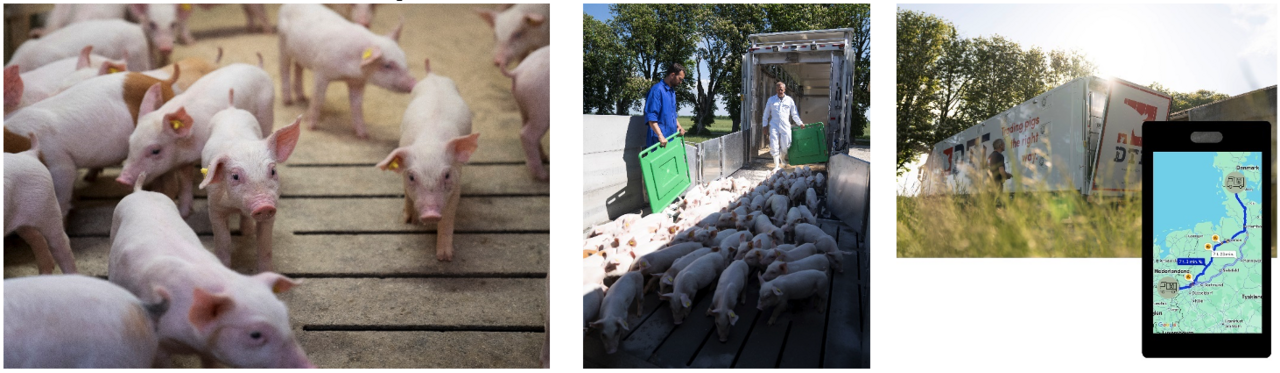
Multi-disciplinary Approach
Trading of pigs, livestock transport, trading efficiency, IoT, disease prevention, sustainability, farmers, farmers organisations, service providers, livestock traders, livestock trailer manufacturers.
Co-creation with end-users and stakeholders

Objective
The Living Lab in Denmark focuses on livestock (pig) transport and develop and test solutions suitable for different operations (loading/unloading of animals or over-the-route transportation), adopting several communication technologies (public 5G, private 5G, WiFi 6).
Description
Multiple over-the-route 5G coverage assessments are performed, providing relevant snapshots of the 5G coverage along the main transportation roads and across multiple countries. In areas lacking 5G coverage, or encountering roaming malfunctioning, connectivity is guaranteed by satellites. Finally, the Living Lab is investigating the deployment of on-demand local green broadband network with terrestrial or satellite backhaul, dedicated for the provisioning of on-demand coverage and/or capacity during the loading/unloading of the animals.
Related webinar
Webinar 3 – Livestock transport & remote forestry
Improving livestock transport and remote operations through resilient IoT connectivity solutions.
Watch on YouTube →





Partners
IPR terms & conditions for Living Lab Denmark
Participation in the COMMECT Living Lab Denmark and the use of its tools and data are governed by dedicated IPR Terms & Conditions. This document explains how background knowledge, data and results can be used and shared by partners and stakeholders.
📄 Download IPR Terms & Conditions – Living Lab Denmark (PDF)
Contact persons – Living Lab Denmark
For questions about the livestock transport Living Lab, pilots or collaboration opportunities, please contact:
- Jesper Schimann Hansen – jsh@padborgtransportcenter.dk
- Michael Nørremark – Michael.Norremark@ece.au.dk
Use cases

Use Case 3.1: Monitoring of Livestock Transport along Routes
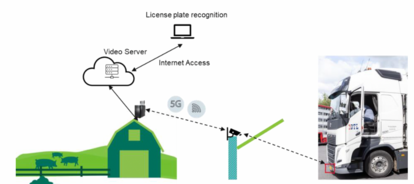
Use Case 3.2: Truck License Plate Recognition/Authorization
